SmartCane: harvest intelligence for outgrower supply chains

International Convention Centre, Durban, South Africa
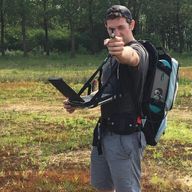
A short commercial presentation at the 98th SASTA Congress in Durban, the year SASTA turned 100.
The question behind it comes up in almost every conversation with a mill: how much cane is coming next month? A mill that depends on outgrowers has to answer that for thousands of separate fields, many smaller than an acre. Scouting is accurate but only reaches a few dozen fields a day. The weighbridge is exact but only tells you what already arrived.
The talk was about how we tell, from satellite imagery alone, that a field has been cut. One image is not enough. A dark field can be a harvest, but also cloud, shadow, a pre-harvest burn, lodging or waterlogging. What settles it is the order of the images. Our model (an LSTM) reads the full record of each field, from imagery at about 3 m with a near-daily revisit, and judges every date against what came before and after. We classify each pixel separately, so a field that is cut in sections over a few weeks shows up as a partial harvest instead of a confusing average.
A second model uses that harvest history and the crop age to estimate which fields are likely to be cut in the next four weeks. The mill gets one file a week, as CSV or through an API, with every field’s last harvest, crop age and readiness score.
I also showed the limits. On our reference scheme 78% of harvests were flagged before the cut. The readiness estimate is good within the last month and weak beyond about eight weeks, and detection is less certain under the cloud of the wet season.