Mamanteo: Ancient Water Harvesting in Peru
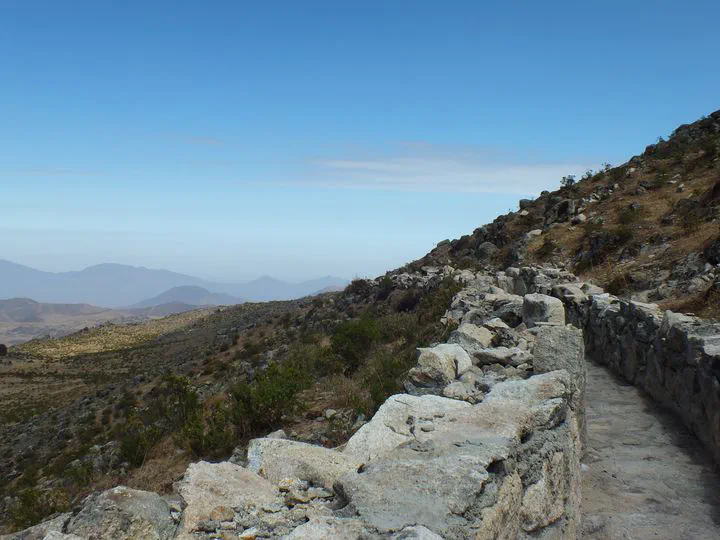 Mamanteo infiltration channels in Huamantanga, Peru - field research 2014
The Ancient Art of “Sowing and Harvesting Water”
During my research in Huamantanga, Peru, I encountered one of the most ingenious water management systems ever developed: the Mamanteo (also known as Amunas). This pre-Columbian technology, whose name comes from the Quechua word meaning “to nurture” or “to breastfeed,” represents a sustainable approach to water harvesting that has sustained Andean communities for over 1,300 years.
What is Mamanteo?
The Mamanteo system is a sophisticated water harvesting technology that works by “delaying” rainy-season runoff in the mountains so it can be used in lowland settlements during the dry season. The system operates on a beautifully simple principle: “sembrar y cosechar agua” - to sow and harvest water.
How It Works
- Water Capture: During the rainy season, runoff water from quebradas (mountain streams) is diverted through carefully constructed stone channels
- Infiltration: The water is directed to zones of high infiltration - permeable sections of soil or rock in the mountainside
- Natural Filtration: As the water infiltrates, it’s naturally filtered through ground layers
- Delayed Release: Weeks or months later, this “sown” water emerges in downslope springs
- Dry Season Supply: Communities can access this stored water during drought periods
The technology may have been developed by the Andean Wari culture as early as 700 AD, making it one of the world’s oldest documented water harvesting systems.
My 2014 Research in Huamantanga
During my BSc internship and thesis research in 2014, I conducted field studies in Huamantanga to understand the infiltration dynamics of the ancient Mamanteo system. The community of Huamantanga, located in the province of Canta near Lima, provided an ideal natural laboratory for investigating how these pre-Incan channels manage water infiltration across different landscape positions.
Research Methodology
My field work focused on spatial infiltration analysis along the Mamanteo canal system. The research involved:
- Infiltration Measurements: Systematic measurement of water infiltration rates at various points around the canal network
- Site Characterization: Detailed analysis of different infiltration zones where water is intentionally directed from the channels
- Soil Assessment: Investigation of soil properties and permeability at different locations along the water flow path
- Landscape Mapping: Documentation of how the ancient engineers selected specific areas for maximum infiltration efficiency
Key Research Findings
Infiltration Variability
The research revealed significant spatial variation in infiltration capacity around the canal system. Different areas showed markedly different infiltration rates, highlighting the sophisticated understanding that ancient engineers had of local hydrogeology.
Strategic Water Placement
The Mamanteo system demonstrates remarkable precision in where water is directed for soil infiltration. The ancient channels don’t simply release water randomly, but target specific zones with optimal infiltration characteristics:
- High-permeability zones: Areas with fractured bedrock or coarse soil materials
- Strategic elevation points: Locations that maximize gravitational flow and subsurface storage
- Vegetation-supported areas: Sites where root systems enhance soil structure and infiltration capacity
Engineering Wisdom
The 2014 research highlighted how the pre-Incan engineers possessed an intuitive understanding of:
- Hydrogeological mapping: Identifying the most effective infiltration zones
- Water routing efficiency: Optimizing channel placement for maximum water capture and storage
- Landscape-scale thinking: Designing systems that work with natural topography and geology
Research Implications
This field work provided valuable insights into the micro-scale processes that make Mamanteo systems so effective. Understanding where and how water infiltrates helps explain why these ancient systems have remained functional for over a millennium and how they can be optimized in modern restoration efforts.
The research also demonstrated that the success of Mamanteo systems relies not just on the canal engineering, but on the careful selection and management of infiltration zones - knowledge that was clearly well-developed among pre-Incan water managers.
Connection to Modern Applications
The 2014 infiltration research has direct relevance to current restoration efforts. By understanding the spatial patterns of infiltration effectiveness, modern engineers can:
- Better design new Mamanteo systems
- Optimize the restoration of existing channels
- Predict the performance of scaled-up implementations
- Inform site selection for similar nature-based solutions
Modern Relevance
Lima, the world’s second-largest desert city, faces severe water challenges. With a population of over 10 million people served by the small Rímac River, the city is looking to ancient solutions for modern problems. The Peruvian national water agency (SUNASS) has created a tax-supported fund that combines “grey infrastructure with green infrastructure,” with some funds specifically allocated to restore Mamanteo systems.
Current Restoration Efforts
As of 2016, ten Mamanteo systems had been restored through collaborative efforts between:
- ONG Alternativa - Local NGO
- Aquafondo - Water conservation organization
- CONDESAN - Mountain research consortium
Challenges and Solutions
Environmental Challenges
- Overgrazing: Excessive livestock in highland areas compacts vegetation, reducing its capacity to act as a “sponge” for rainwater
- Climate Change: Altered precipitation patterns affect the timing and volume of water available for harvesting
Community Solutions
- Traditional Knowledge: Working with local communities to combine ancestral practices with modern water management
- Sustainable Grazing: Implementing rotational grazing systems to preserve vegetation cover
- Capacity Building: Training community members in system maintenance and restoration
Technical Innovation
The Mamanteo represents a perfect example of nature-based solutions - using natural processes to address human challenges. Unlike modern dams or reservoirs, this technology:
- Uses gravity flow - no external energy required
- Provides natural filtration - improving water quality
- Supports biodiversity - maintaining mountain ecosystems
- Requires minimal maintenance - stone channels last for centuries
- Adapts to landscape - works with natural topography
Global Implications
Climate risk studies by Peruvian hydrology agencies have identified the restoration of Amunas as having “low cost and high hydrological benefit.” This ancient technology offers valuable lessons for water-scarce regions worldwide, particularly in mountainous areas facing similar challenges.
The Mamanteo system demonstrates that sometimes the most sustainable solutions are not the newest technologies, but the oldest ones - refined over centuries of use and perfectly adapted to their environment.
Future Research
Continued research is needed to:
- Scale up implementation for urban water supply
- Model climate change impacts on system effectiveness
- Integrate with modern infrastructure for hybrid solutions
- Document traditional knowledge before it’s lost
- Train new generations in system maintenance
The Mamanteo reminds us that in our search for sustainable solutions, we should not overlook the wisdom embedded in ancient technologies. In the mountains of Peru, the art of “nurturing the mountain” continues to provide water security, just as it has for over a millennium.