DRAINMOD Modeling for Norwegian Agricultural Catchments
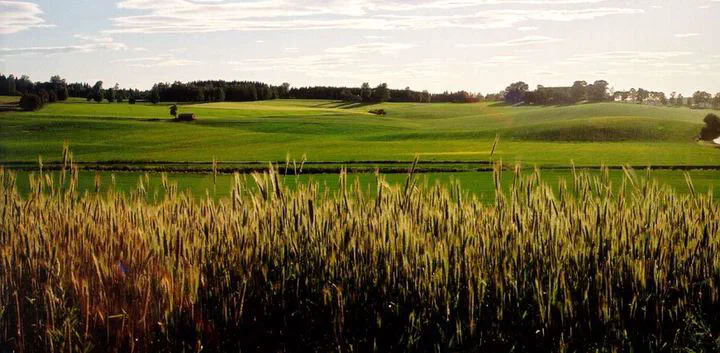 Norwegian agricultural catchment at Skuterud - study area for DRAINMOD hydrological modeling research
Hydrological Modeling of Norwegian Agricultural Catchments
This MSc thesis, completed in September 2017 at Wageningen University, investigates the intricate dynamics of soil physical characteristics, hydrological flow paths, and water balance within a small agricultural catchment in Norway. The research employs the DRAINMOD model to simulate and analyze these complex hydrological components, providing valuable insights into the processes governing water movement in mixed agricultural-forest landscapes.
Research Context and Motivation
The study addresses the critical need to understand and predict hydrological impacts of climate change in Norway. With expected increases in both temperature and precipitation, Norwegian agricultural systems face significant challenges that require improved water management strategies. This research explores how different combinations of soil types and land uses influence hydrological processes and the overall water balance within catchment systems.
Study Area Characteristics
The Norwegian catchment under investigation presents unique challenges for hydrological modeling:
- Mixed land use: Predominantly agriculture and forest
- Diverse soil types: Varying physical and hydraulic properties
- Hilly terrain: Complex topography affecting water flow patterns
- Nordic climate: Seasonal variations with freeze-thaw cycles
About DRAINMOD
DRAINMOD is a comprehensive field-scale hydrologic model specifically designed to simulate the hydrology of poorly drained soils. Originally developed at North Carolina State University, DRAINMOD has become the international standard for agricultural drainage system design and evaluation.
Model Capabilities
DRAINMOD simulates:
- Soil water dynamics in drained agricultural lands
- Subsurface drainage flows through tile drains and ditches
- Surface runoff and ponding conditions
- Crop water stress and yield impacts
- Nutrient transport through drainage systems
- Water table fluctuations in response to weather patterns
Research Methodology
DRAINMOD Model Application
The research employed DRAINMOD to simulate hydrological processes, conducting numerical experiments to evaluate the model’s suitability for Norwegian catchment conditions. The modeling approach focused on:
- Catchment-scale analysis: Moving beyond field-scale applications to understand broader hydrological dynamics
- Model calibration: Adapting DRAINMOD parameters for Norwegian soil and climate conditions
- Numerical experiments: Testing various scenarios to understand system behavior
- Parameter sensitivity analysis: Identifying critical factors affecting water balance
Key Parameters Investigated
The study examined several critical parameters and their effects on catchment water balance:
- Surface storage capacity: Impact on runoff generation and retention
- Drainage intensity: Effects of different drainage system configurations
- Drain spacing: Optimal spacing for various soil types and conditions
- Soil temperature thresholds: Critical values for freeze-thaw processes
- Lateral hydraulic conductivity: Subsurface flow characteristics
Major Research Findings
Parameter Sensitivity Results
The research revealed that specific parameters have substantial impacts on hydrological dynamics:
- Drain spacing: Significant influence on water table management and drainage efficiency
- Lateral hydraulic conductivity: Major control on subsurface flow patterns and timing
- Surface storage: Important for peak flow attenuation and water retention
- Temperature thresholds: Critical for accurate simulation of Nordic climate effects
Model Performance Assessment
The study evaluated DRAINMOD’s capability to represent Norwegian catchment processes:
Strengths
- Valuable insights: Provided meaningful understanding of hydrological processes
- Parameter sensitivity: Successfully identified critical controlling factors
- Climate adaptation: Demonstrated potential for climate change impact assessment
Limitations
- Complex terrain representation: Challenges in modeling hilly topography
- Catchment-scale complexity: Difficulty capturing full range of spatial variability
- Nordic-specific processes: Some limitations in representing unique Norwegian conditions
Climate Change Implications
Expected Changes
The research addresses anticipated climate impacts in Norway:
- Increased temperatures: Affecting snow dynamics and growing seasons
- Enhanced precipitation: Altering water balance and drainage requirements
- Seasonal shifts: Changes in timing of hydrological processes
- Extreme events: Increased frequency and intensity of weather extremes
Agricultural Adaptation Needs
Findings highlight critical areas for agricultural water management:
- Drainage system optimization: Adapting to changing precipitation patterns
- Water storage strategies: Managing increased variability in water availability
- Soil management: Maintaining productivity under changing hydrological regimes
- Infrastructure planning: Designing systems resilient to climate change
Research Contributions and Conclusions
Scientific Contributions
This thesis provides several important contributions to hydrological modeling:
- Catchment-scale DRAINMOD application: Extended model use beyond typical field-scale applications
- Norwegian parameter calibration: Developed parameter sets specific to Nordic conditions
- Sensitivity analysis insights: Identified critical parameters for Norwegian catchments
- Climate change assessment: Demonstrated modeling approach for impact evaluation
Key Conclusions
The research reached several important conclusions:
-
Model Utility: DRAINMOD provides valuable insights into hydrological processes, particularly for understanding parameter sensitivity and system behavior
-
Parameter Importance: Drain spacing and lateral hydraulic conductivity emerge as critical factors controlling catchment water balance
-
Model Limitations: While useful, DRAINMOD may not fully capture the complexities of Norwegian catchments, particularly those with complex topography
-
Further Research Needs: Model refinement and improved data precision are necessary for better representation of Nordic hydrological processes
Future Research Recommendations
Model Development Priorities
The thesis identifies several areas for continued research:
- Topographic representation: Enhanced modeling of hilly terrain effects
- Spatial variability: Better incorporation of catchment heterogeneity
- Nordic process representation: Improved simulation of freeze-thaw cycles and snow dynamics
- Scale integration: Methods for linking field-scale processes to catchment-scale outcomes
Data and Methodology Improvements
Recommendations for enhancing future studies:
- Data precision: Higher resolution spatial and temporal data collection
- Model accuracy: Refinement of parameter estimation methods
- Validation approaches: Extended field measurement campaigns
- Uncertainty analysis: Quantification of modeling uncertainties
Practical Applications
Water Management Planning
Research findings inform:
- Drainage system design for changing climate conditions
- Agricultural adaptation strategies for enhanced resilience
- Water resource planning at catchment scales
- Policy development for sustainable water management
Agricultural Sustainability
Contributions to sustainable agriculture:
- Improved water use efficiency through better system understanding
- Climate adaptation strategies for Norwegian farming systems
- Risk assessment tools for agricultural planning
- Decision support for drainage investments
Academic and Professional Impact
This research contributes to both academic understanding and practical applications in:
- Hydrological modeling advancement in Nordic conditions
- Agricultural engineering for climate adaptation
- Water resource management in changing environments
- Sustainable agriculture practices development
The thesis demonstrates the value of applying established modeling tools like DRAINMOD to new geographic and climatic contexts, while also highlighting the importance of understanding model limitations and the need for continued research to address complex environmental challenges.